
Breaking the Surface
Insurgent Playing and the Fight for Public Spaces

Certain moments of resistance in the history of the Civil Rights Movement resonate far beyond their immediate impact. Among these are the wade-ins, acts of insurgent playing that challenged the racial segregation of Southern beaches in the mid-20th century. By enjoying the beach, wade-in participants disrupted the entrenched social norms of segregation and reclaimed public spaces as sites of equality and freedom.
Under Jim Crow laws, beaches in the South were often designated as "Whites Only," leaving Black Americans excluded from enjoying public spaces fundamental to recreation and community. This exclusion extended beyond leisure; it underscored a broader system of racial oppression that sought to limit access to basic rights and freedoms. Beaches held a dual significance—representing freedom and the vastness of opportunity while also being spaces where segregationists maintained rigid control. Against this backdrop, wade-ins became a potent act of insurgent playing.
One of the earliest and most influential wade-ins occurred in Biloxi, Mississippi, from 1959 to 1963. Led by Dr. Gilbert R. Mason Sr., a local physician, the Biloxi wade-ins were a series of protests aiming to desegregate the city's public beaches. On May 14, 1959, Dr. Mason and a group of Black residents attempted to use a "Whites Only" beach. Their peaceful act of insurgent playing was met with violence from police and local mobs. Despite the brutal response, the Biloxi wade-ins gained national attention, highlighting the pervasive racism that governed public spaces. Subsequent wade-ins in the area were equally met with hostility, but they galvanized support from civil rights organizations and set the stage for federal intervention.
The wade-ins were not isolated events. Across the South, similar actions unfolded in cities like St. Augustine, Florida, and Charleston, South Carolina. In June 1964, James Brock, the manager of the Monson Motor Lodge in St. Augustine, Florida, attempted to disrupt a protest against the hotel's whites-only policy by pouring acid into the swimming pool where activists were conducting a wade-in. This shocking act of violence drew national attention, further underscoring the hostility faced by those demanding equal access to public spaces. Participants faced arrests, beatings, and public backlash, but their courage forced local governments to confront the legality of segregation.
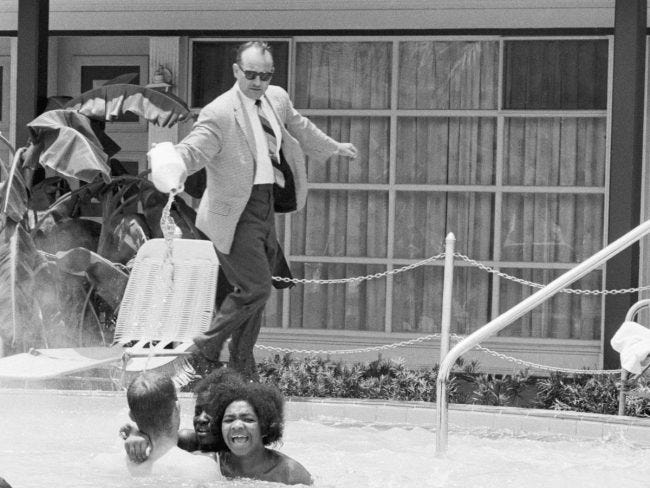
In many cases, legal challenges followed the wade-ins. For example, in Biloxi, the Fifth Circuit Court of Appeals ruled in 1968 that the segregation of public beaches violated the Constitution. Such victories were pivotal in dismantling Jim Crow laws and ensuring equal access to public amenities.
Women and young people played crucial roles in organizing and participating in these acts of insurgent playing. Figures like Patricia Stephens Due in Florida mobilized communities, demonstrating that the Civil Rights Movement was a collective effort that spanned generations and gender lines. Their involvement added layers of resilience and strategy to the protests. The wade-ins were not just about beaches. They demanded full participation in American life, rejecting the notion that public spaces could remain segregated in a democratic society. They set a precedent for future environmental and social justice movements advocating equitable access to natural resources. Moreover, these protests redefined the narrative of resistance. They demonstrated that even seemingly mundane acts, like swimming or walking along a shore, could become revolutionary when done in defiance of oppression.
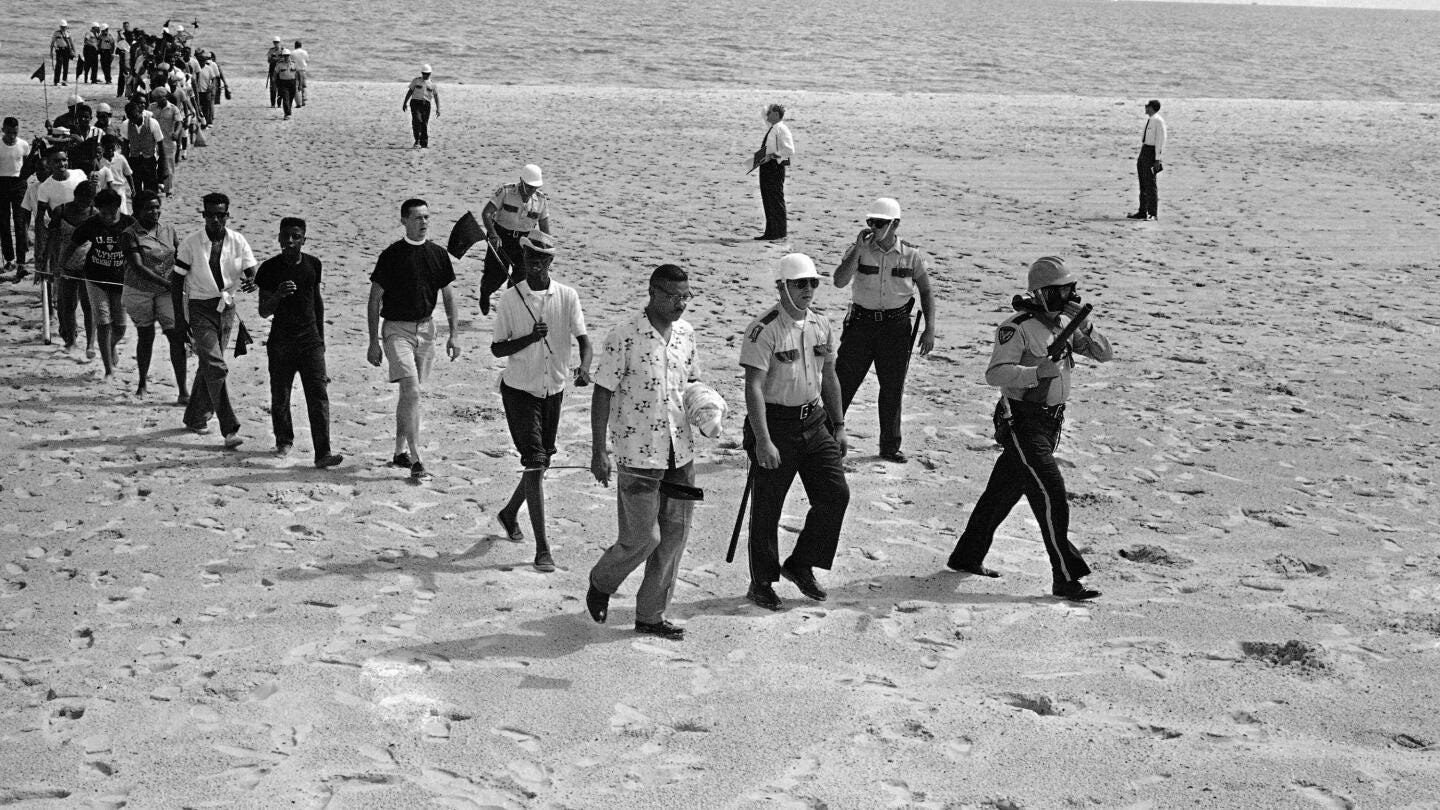
Today, the legacy of the wade-ins is celebrated as part of the broader Civil Rights Movement. Organizations like the NAACP and local historical societies have worked to preserve the stories of those who risked their lives to desegregate beaches. In places like Biloxi, memorials and educational programs ensure that future generations understand the sacrifices made to secure their freedoms.
The persistence of racial exclusion in recreational spaces was starkly highlighted in the 2015 McKinney, Texas, pool party incident. A viral video showed police violently detaining a Black teenager at a predominantly white private pool, sparking national outrage. The event underscored how suburban swimming pools, once central to post-desegregation exclusion, remain sites of tension and implicit segregation. This modern-day echo of Civil Rights-era struggles serves as a reminder that public spaces are often battlegrounds for equity and access.

Planners are crucial in addressing these inequities and promoting inclusive public spaces. Solutions include increasing funding for public recreational facilities, ensuring affordable access to pools and beaches, and designing spaces that actively welcome diverse communities. Embedded planning—a practice that integrates planners into the communities they serve—is essential to these efforts. Planners can also advocate for policies that prevent the privatization of shared resources and work to include underserved communities in the decision-making process for public spaces. By prioritizing equity and inclusivity, planners can help create environments where insurgent playing acts are no longer necessary to claim fundamental rights but are celebrated as shared expressions of joy and community.
The wade-ins remind us that justice is often pursued through everyday acts of courage. By reclaiming spaces where they were unwelcome, participants transformed the beaches and challenged the systemic inequalities of their time. Their actions continue to inspire efforts toward equity, showing us the enduring power of insurgent playing.
Sources:
Sources:
Florida Conservation Voters, "Beach Wade-Ins Inspired Civil Rights Action"
History.com, "How Civil Rights Wade-Ins Desegregated Southern Beaches"
A Mighty Girl, "The Civil Rights Movement’s Fight to Desegregate Beaches"
NPR, "Remembering a Civil Rights Swim-In: It Was a Milestone"
The New York Times, "McKinney, Tex., Pool Party Dispute Leads to Police Officer Suspension"
Bronco Magazine, "Embedded Planning: Building Equity from Within Communities"